 -
-
Summary of our research
A research group led by Specially Appointed Associate Professor Liqing Zang (Graduate School of Regional Innovation Studies) and Lecturer Yasuhito Shimada (Graduate School of Medicine), in collaboration with Konan Chemical Manufacturing Co., Ltd., has demonstrated that rhamnan sulfate, a sulfated polysaccharide derived from the seaweed Monostroma nitidum (Hitoegusa), improves metabolic abnormalities and chronic inflammation in a mouse model of diabesity.
Using spontaneous type 2 diabetic NSY/Hos mice fed a high-fat diet for 10 weeks, the researchers found that dietary supplementation with rhamnan sulfate reduced body-weight gain by approximately 30% and decreased plasma triglyceride and total cholesterol levels by approximately 23% and 26%, respectively. In addition, rhamnan sulfate suppressed the high-fat diet-induced elevation of fasting blood glucose and improved insulin resistance, as indicated by a 56% reduction in the HOMA-IR index.
Furthermore, RNA sequencing (RNA-seq) analyses of brown adipose tissue, liver, and skeletal muscle revealed a broad suppression of inflammation-related pathways, including TNF signaling, IFN-γ signaling, S100 family signaling, and neutrophil degranulation. Experiments using cultured macrophages also confirmed that rhamnan sulfate suppressed the expression of pro-inflammatory cytokines, including TNF-α, IL-6, and IL-1β.
These findings suggest that rhamnan sulfate may improve diabesity-associated metabolic abnormalities by suppressing chronic inflammation. The study highlights the potential of Hitoegusa-derived functional ingredients for future applications in health-promoting foods and nutritional interventions.
This study has been published in the Journal of Functional Foods.
This research was published on July 6, 2026, in the international journal Biomedicine & Pharmacotherapy.
Article title:
Dietary Rhamnan Sulfate is associated with improved metabolic parameters and modulation of inflammation-related pathways in high-fat diet-fed mice.
DOI: 10.1016/j.jff.2026.107402
For details, please see the full press release.
Researcher information
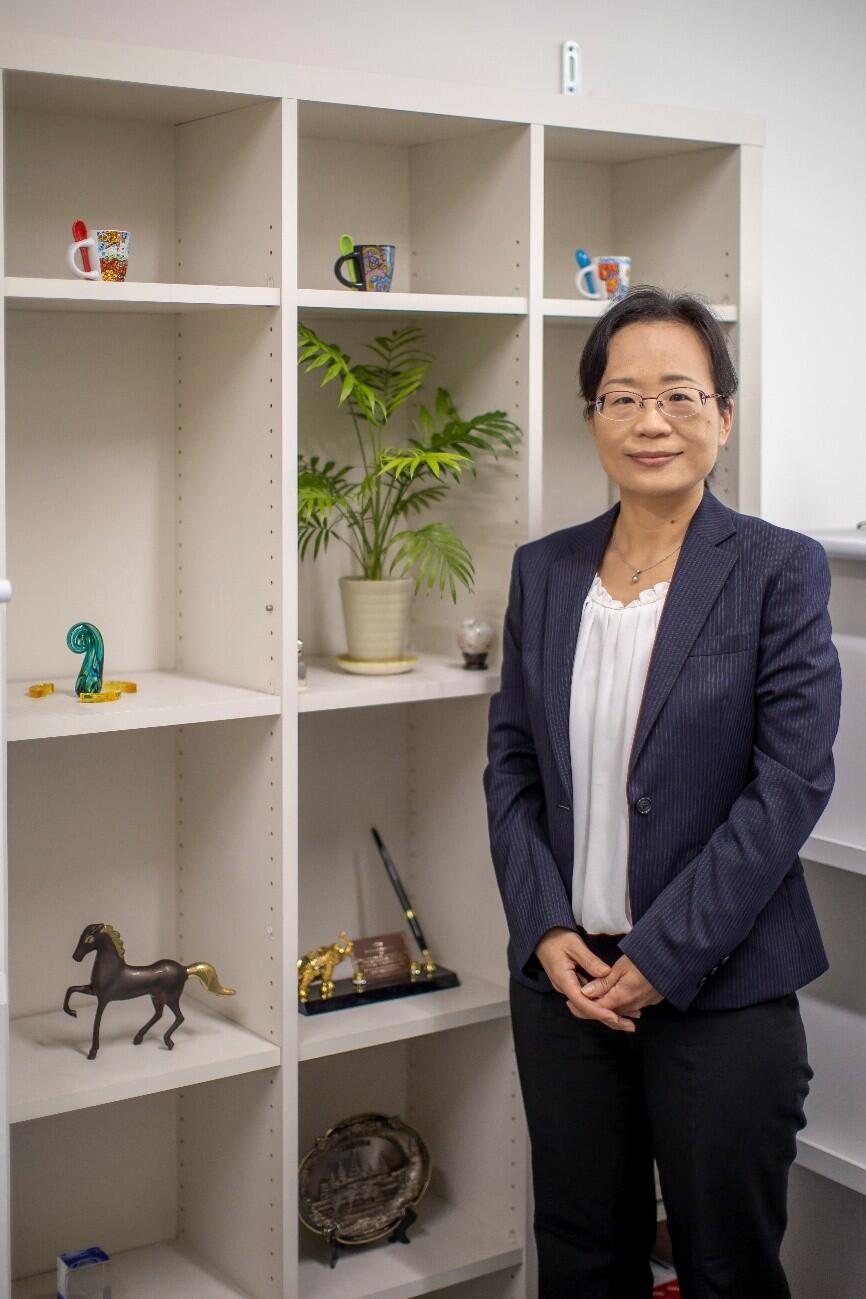
Liqing Zang
Graduate School of Regional Innovation Studies, Specially Appointed Associate Professor
Specialized area:
Pharmacology, disease models, and functional food science
Current research field:
・Development and application of zebrafish and mouse models of human diseases
・Functional evaluation and mechanistic analysis of natural products and food-derived components
・Discovery of therapeutic candidates for diabetes and related diseases

SHIMADA Yasuhito
Lecturer, Graduate School of Medicine, Mie University
Representative, Mie University Zebrafish Research Center
Specialized area:
Integrative Pharmacology; Drug discovery and disease modeling using zebrafish
Current research field:
・Development of disease models using zebrafish
・Drug discovery research using natural compounds
・Establishment of human disease models using the high-temperature-resistant fish Garra rufa