<?xml version="1.0" encoding="UTF-8"?>
<feed xmlns="http://www.w3.org/2005/Atom">
    <title>Mie University English Homepage</title>
    <link rel="alternate" type="text/html" href="https://www.mie-u.ac.jp/en/" />
    <link rel="self" type="application/atom+xml" href="https://www.mie-u.ac.jp/en/atom.xml" />
    <id>tag:www.mie-u.ac.jp,2012-03-08:/en//58</id>
    <updated>2014-01-08T07:24:08Z</updated>
    
    <generator uri="http://www.sixapart.com/movabletype/">PowerCMS Platform 6.3.8016</generator>


<entry>
    <title>A Breakthrough Technology That Reveals the Unique Identity of Every Single Cell - PRESS RELEASE</title>
    <link rel="alternate" type="text/html" href="https://www.mie-u.ac.jp/en/R-navi/release/bio/a-breakthrough-technology-that-reveals-the-unique-identity-of-every-single-cell.html" />
    <id>tag:www.mie-u.ac.jp,2025:/en/R-navi/release//97.14487</id>
    <published>2025-12-15T08:02:29Z</published>
    <updated>2025-12-16T00:55:27Z</updated>
    <summary>Summary of our research A collaborative ...</summary>

    
        <category term="Bioresources" scheme="http://www.sixapart.com/ns/types#category" />
    
    
    <content type="html" xml:lang="en-us" xml:base="https://www.mie-u.ac.jp/en/R-navi/release/">
        <![CDATA[<h3><span style="color: #008000;">Summary of our research</span></h3>
<p></p>
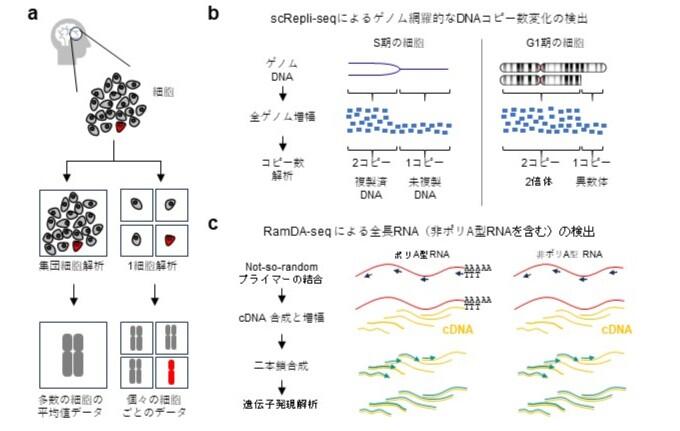
<p>A collaborative research group, including Professor Shin-ichiro Takebayashi(Graduate School of Biological Resources Science, Mie University), Assistant Professor Rawin Poonperm, Graduate students Taiki Yoneda and Taito Imada (at the time of the research), Dr. Ichiro Hiratani (Team Director, RIKEN), and Professor Itoshi Nikaido (Team Director, RIKEN; Institute of Science Tokyo), has developed a novel single-cell analysis technology1 called scRepli-RamDA-seq (scRR-seq). This method allows high-resolution, simultaneous analysis of both genomic DNA2 and RNA within a single cell. By directly linking changes in DNA to changes in gene expression, scRR-seq is expected to help solve problems that have been difficult to address with conventional techniques.</p>
<p>In recent years, advances in single-cell analysis have revolutionized biology by revealing cell-to-cell variability that cannot be captured in analyses of cell populations, leading to discoveries such as the identification of rare abnormal cells.<br />However, many existing single-cell methods analyze DNA and RNA separately,limiting our understanding of how these molecules are functionally connected. To overcome this limitation, scRR-seq was designed to analyze DNA and RNA simultaneously from a single cell.</p>
<p>This new method was made possible by combining two cutting-edge single-cell analysis techniques previously established by the research team: scRepli-seq, which allows high-resolution analysis of DNA copy number, and RamDA-seq, a highly sensitive RNA sequencing method. The integration of these approaches resulted in scRR-seq, a groundbreaking single-cell analysis technology.</p>
<p>Using scRR-seq, the research team was able to investigate the direct relationship between DNA and gene activity in individual cells. This allowed them to address previously unresolved, long-standing questions in biology and led to the discovery of new markers of cell cycle progression. The study also revealed that the relationship between DNA copy number and gene activity is complex and not always a simple positive correlation.</p>
<p>This research was published in the scientific journal Nature Communications (issue dated December 15, 2025).</p>
<p>This press release is <a href="https://www.mie-u.ac.jp/en/R-navi/release/files/250929_scRRseq_PressRelease_RP2_251209_finalizedRP1_without_Trackchanges.pdf" class="a-pdf">"here."</a></p>
<p style="text-align: center;"><img src="https://www.mie-u.ac.jp/en/R-navi/release/files/20251215%E7%AB%B9%E6%9E%97%E5%85%88%E7%94%9F%E3%83%AA%E3%83%AA%E3%83%BC%E3%82%B9%E5%9B%B3%EF%BC%91.jpg" alt="20251215竹林先生リリース図１.jpg" width="350" /></p>
<p style="text-align: center;"></p>
<h2><br /><span style="color: #008000;">Researcher information</span></h2>
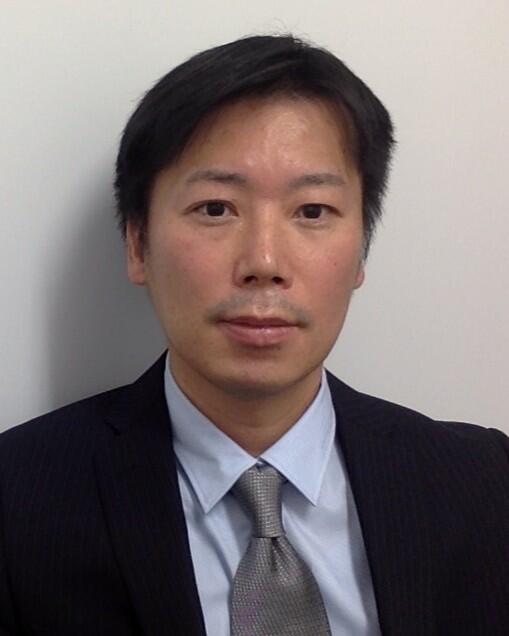
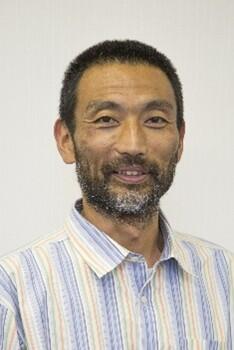
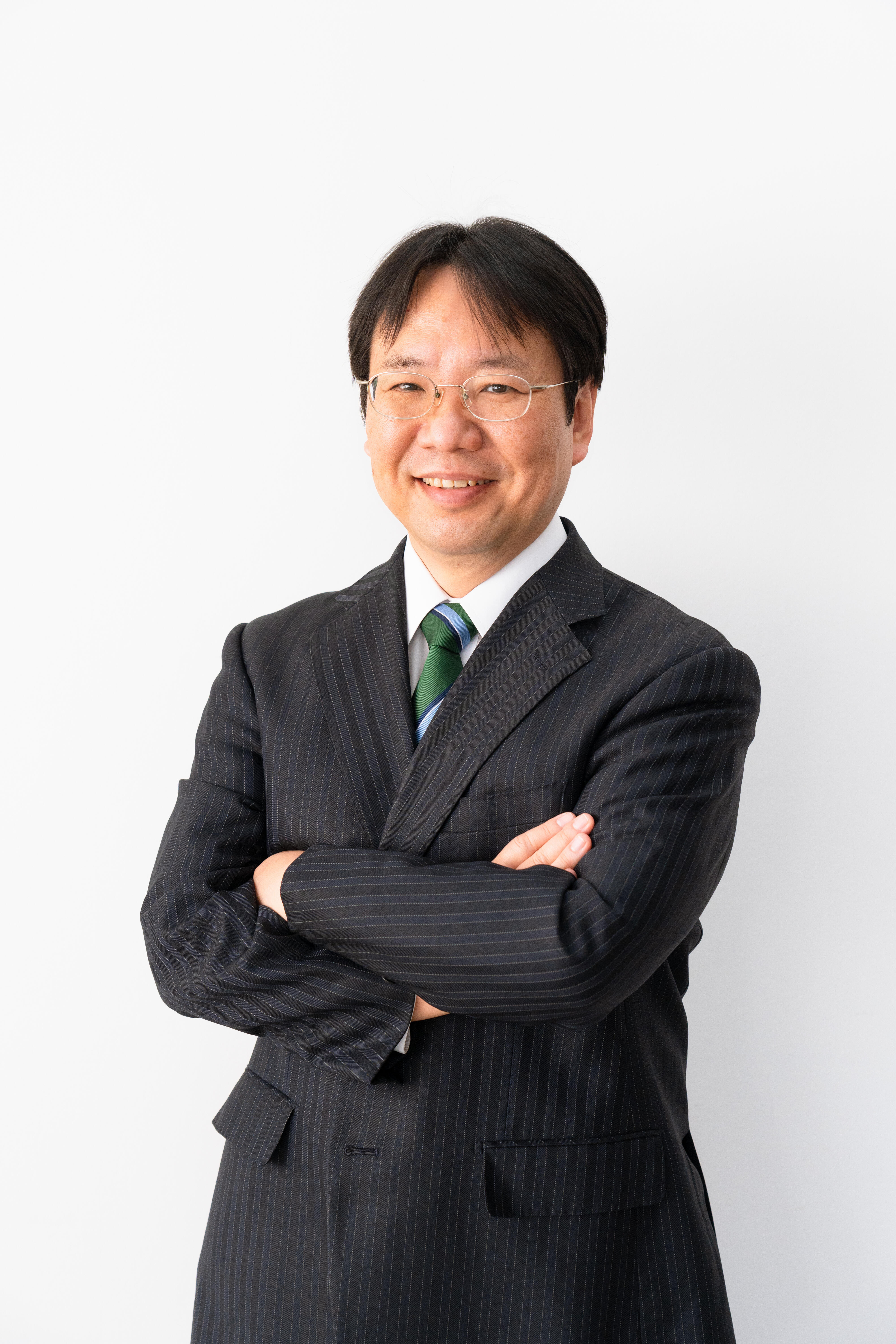
<p><img src="https://www.mie-u.ac.jp/en/R-navi/release/files/20251215%E7%AB%B9%E6%9E%97.jpg" alt="20251215竹林.jpg" width="150" /></p>
<p><span class="bold">TAKEBAYASHI Shinichiro</span><br />　Graduate School of Bioresources Professor</p>
<p></p>
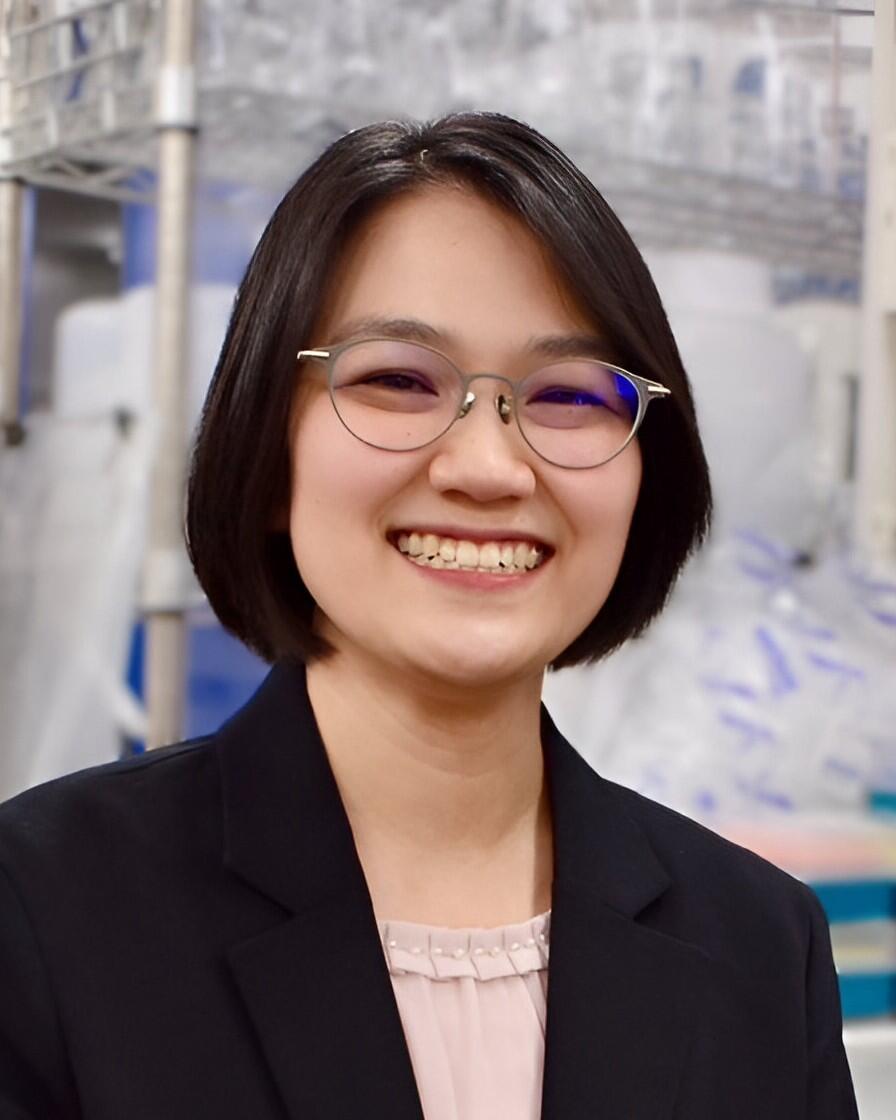
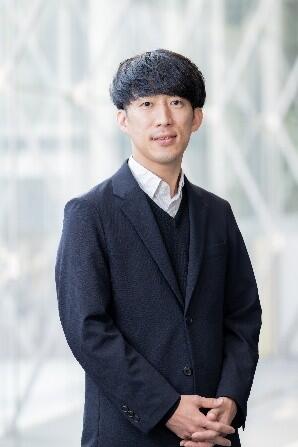
<p><img src="https://www.mie-u.ac.jp/en/R-navi/release/files/20251215%E3%83%95%E3%82%9A%E3%83%BC%E3%83%B3%E3%83%8F%E3%82%9A%E3%83%BC%E3%83%A0%E3%83%BB%E3%83%A9%E3%82%A6%E3%82%A3%E3%83%B3%E5%8A%A9%E6%95%99.jpeg" alt="20251215プーンパーム・ラウィン助教.jpeg" width="150" /></p>
<p><span class="bold">POONPERM RAWIN</span><br />　Graduate School of Bioresources Assistant Professor</p>
<p></p>
<p><img src="https://www.mie-u.ac.jp/en/R-navi/release/files/20251215%E7%B1%B3%E7%94%B0%E6%B3%B0%E5%9F%8E_%E7%94%9F%E7%89%A9%E8%B3%87%E6%BA%90%E5%AD%A6%E7%A0%94%E7%A9%B6%E7%A7%91%E5%A4%A7%E5%AD%A6%E9%99%A2%E7%94%9F%EF%BC%88%E7%A0%94%E7%A9%B6%E5%BD%93%E6%99%82%EF%BC%89.jpeg" alt="20251215米田泰城_生物資源学研究科大学院生（研究当時）.jpeg" width="150" /></p>
<p>YONEDA Taiki<br />　Graduate School of Bioresources Graduate student (at the time of the research)</p>
<p></p>
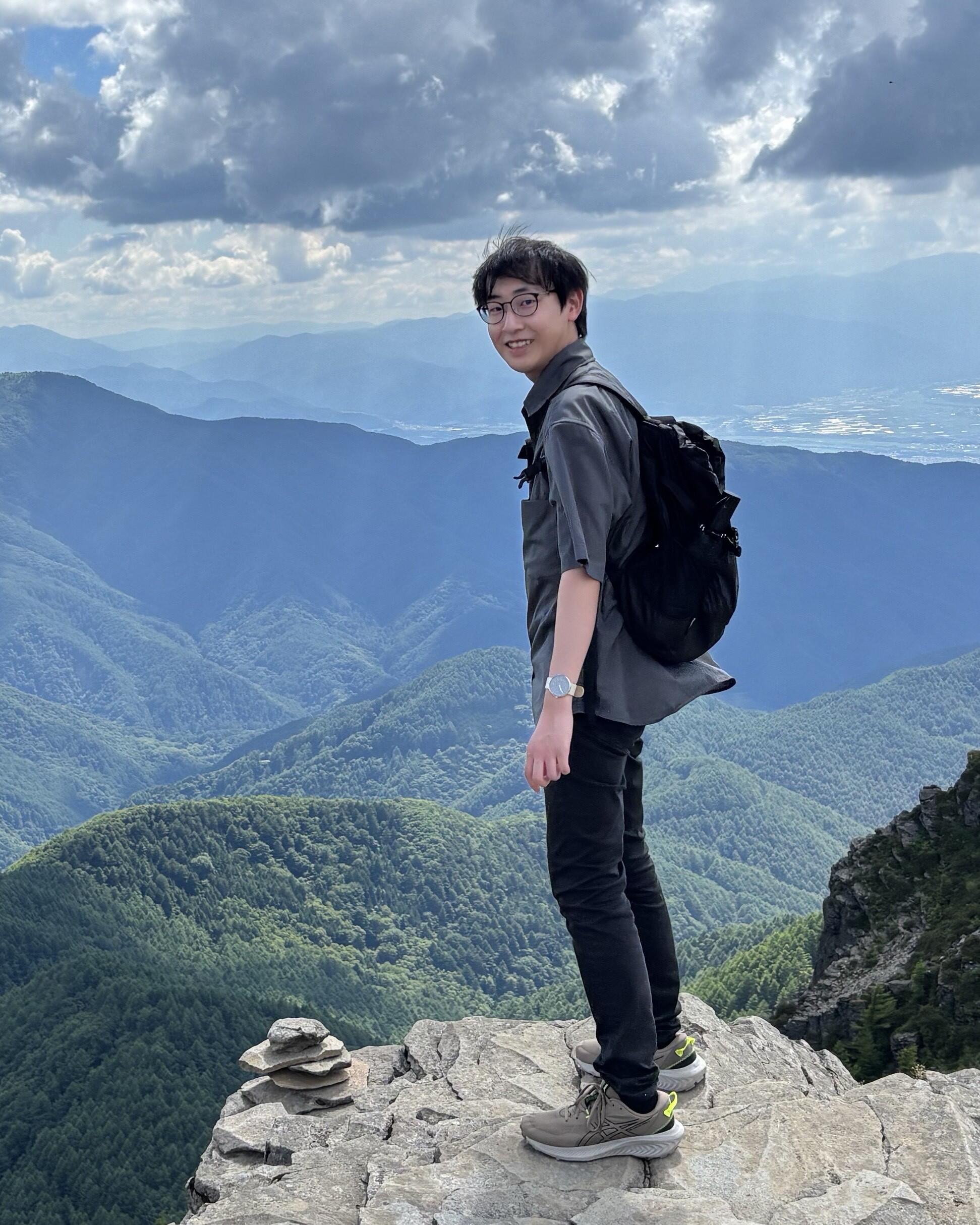
<p><img src="https://www.mie-u.ac.jp/en/R-navi/release/files/20251215%E4%BB%8A%E7%94%B0%E6%B3%B0%E6%96%97_%E7%94%9F%E7%89%A9%E8%B3%87%E6%BA%90%E5%AD%A6%E7%A0%94%E7%A9%B6%E7%A7%91%E5%A4%A7%E5%AD%A6%E9%99%A2%E7%94%9F.jpeg" alt="20251215今田泰斗_生物資源学研究科大学院生.jpeg" width="150" /></p>
<p>IMADA Taito<br />　Graduate School of Bioresources Graduate student</p>]]>
        
    </content>
</entry>

<entry>
    <title>A reappraisal of association between ventilator-associated events and mortality among critically ill patients using marginal structural model: multicenter observational study - PRESS RELEASE</title>
    <link rel="alternate" type="text/html" href="https://www.mie-u.ac.jp/en/R-navi/release/hosp/a-reappraisal-of-association-between-ventilator-associated-events-and-mortality-among-critically-ill.html" />
    <id>tag:www.mie-u.ac.jp,2025:/en/R-navi/release//97.14469</id>
    <published>2025-11-25T01:45:55Z</published>
    <updated>2025-11-25T01:52:49Z</updated>
    <summary>Summary of our research A Japanese multi...</summary>

    
        <category term="University Hospital" scheme="http://www.sixapart.com/ns/types#category" />
    
    
    <content type="html" xml:lang="en-us" xml:base="https://www.mie-u.ac.jp/en/R-navi/release/">
        <![CDATA[<h3><span style="color: #008000;">Summary of our research</span></h3>
<p></p>
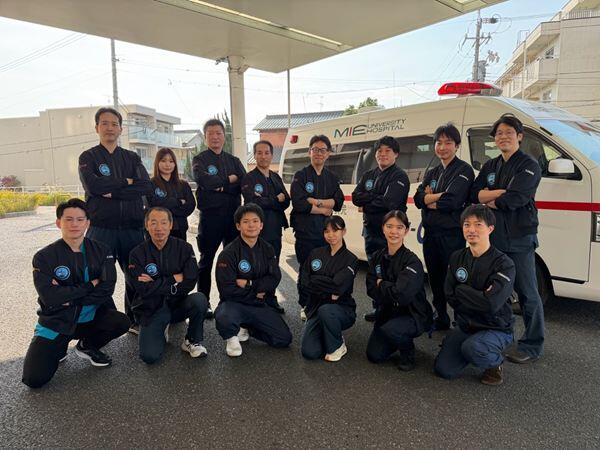
<p>A Japanese multicenter study group led by Professor Kei Suzuki of the Advanced Emergency and Critical Care Center (Emergency Department) at Mie University Hospital, has found that when signs of deterioration (VAE*) are observed in critically ill patients on mechanical ventilation, their subsequent mortality rate increases by approximately twofold. Previous studies suggested that VAE is associated with mortality, however, the validity of this finding has been questioned. This study employed advanced statistical methods to adjust for changes in patient severity over time, thereby revealing more detailed and accurate associations. The findings were published in the highly authoritative intensive care medicine journal "Intensive Care Medicine (5-year Journal Impact Factor: 25.7)" on September 1, 2025.<br />　Meanwhile, in Japan, despite the lack of verification that VAE is a useful indicator for critically ill patients, some facilities had prematurely launched public surveillance programs, treating it as a medical quality indicator. Despite the uncertain benefits of VAE, medical resources and effort have been devoted to its surveillance, however, our study has now added evidence to the field. It is expected to be fully implemented as a new indicator for measuring the quality of intensive care going forward.<br />＊VAE: Ventilator-Associated Event</p>
<p>Researcher information<br />Journal： Intensive Care Medicine<br />Published： 2025、Volume 51、Pages 1764-1774<br />Title： A reappraisal of association between ventilator-associated events and mortality among critically ill patients using marginal structural model: multicenter observational study.<br />Authors：　 Nakahashi S, Suzuki K, Nakashima T, Hayashi Y, Tanabe Y, Tanaka A, Hashiuchi S, Yamashita C, Ito Y, Wada T, Yamashita A, Shima M, Hoshino T, Moriyama K, Kazuma S, Lee HA, Yamaguchi Y, Nakamura Y, Kawanobe Y, Sofue T, Nishimura Y, Shinozaki T, Goto T, Hashimoto S, Fujino Y, Shime N; Japan VAE study Investigators Group.<br />URL: https://link.springer.com/article/10.1007/s00134-025-08074-x<br />DOI: 10.1007/s00134-025-08074-x</p>
<p style="text-align: center;"></p>
<h2><br /><span style="color: #008000;">Researcher information</span></h2>
<p><img src="https://www.mie-u.ac.jp/en/R-navi/release/files/20251110_%E5%91%A8%E8%BE%BA%E6%A7%8B%E9%80%A0%E3%83%A2%E3%83%87%E3%83%AB%E3%82%92%E7%94%A8%E3%81%84%E3%81%9F%E9%87%8D%E7%97%87%E6%82%A3%E8%80%85%E3%81%AB%E3%81%8A%E3%81%91%E3%82%8B%E4%BA%BA%E5%B7%A5%E5%91%BC%E5%90%B8%E5%99%A8%E9%96%A2%E9%80%A3%E4%BA%8B%E8%B1%A1%28VAE%29%E3%81%A8%E6%AD%BB%E4%BA%A1%E7%8E%87%E3%81%AE%E9%96%A2%E9%80%A3%E6%80%A7%E3%81%AE%E5%86%8D%E6%A4%9C%E8%A8%BC%EF%BC%9A%E5%A4%9A%E6%96%BD%E8%A8%AD%E8%A6%B3%E5%AF%9F%E7%A0%94%E7%A9%B6_R.jpg" alt="医学部附属病院　 高度救命救急・総合集中治療センター" width="350" /></p>
<p><span class="bold">SUZUKI Kei</span><br />　The Emergency and Critical Care Center, Mie University Hospital, Professor and Director</p>
<p><span class="bold">Specialized area：</span><br />　Emergency medicine, Intensive Care Medicine, Infectiology</p>
<p><span class="bold">Current research field：<br /></span>・Clinical and Basic Research on Severe Infectious Disease and Coagulation Disorders Associated with Sepsis.<br />・Training Mie Prefecture-Style Emergency and Critical Care Physicians as Super Generalists</p>]]>
        
    </content>
</entry>

<entry>
    <title>GLIM-defined malnutrition is associated with short-term mortality--evidence from 174,439 inpatients across DPC hospitals nationwide - PRESS RELEASE</title>
    <link rel="alternate" type="text/html" href="https://www.mie-u.ac.jp/en/R-navi/release/hosp/glim-defined-malnutrition-is-associated-with-short-term-mortality--evidence-from-174439-inpatients-a.html" />
    <id>tag:www.mie-u.ac.jp,2025:/en/R-navi/release//97.14454</id>
    <published>2025-11-13T01:53:57Z</published>
    <updated>2025-11-25T01:49:46Z</updated>
    <summary>Summary of our research [Background]Maln...</summary>

    
        <category term="University Hospital" scheme="http://www.sixapart.com/ns/types#category" />
    
    
    <content type="html" xml:lang="en-us" xml:base="https://www.mie-u.ac.jp/en/R-navi/release/">
        <![CDATA[<h3><span style="color: #008000;">Summary of our research</span></h3>
<p></p>
<p>[Background]<br />Malnutrition in hospitalized patients is linked to delayed functional recovery and higher mortality; early screening and intervention are therefore recommended. The GLIM criteria provide an international, standardized framework for diagnosing malnutrition, yet large-scale evaluations of their real-world implementation and prognostic utility have been limited. In June 2024, implementation of GLIM assessment was encouraged within Japan's DPC system, creating an opportunity to examine feasibility and prognostic validity.</p>
<p>[Study Details]<br />This study evaluated the relationship between implementation of the GLIM criteria and short-term outcomes under the DPC acute-care payment system, using a nationwide retrospective cohort of 174,439 adult inpatients from ~1,700 hospitals (admitted June-August 2024). The primary outcomes were 30- and 60-day mortality. Adjusted Cox models estimated hazard ratios (HRs) with 95% confidence intervals (CIs). Patients classified as malnourished by GLIM had significantly higher risk than the non-malnourished group: 30-day mortality HR = 1.46 (95% CI, 1.33-1.60) and 60-day mortality HR = 1.46 (95% CI, 1.34-1.59). Moreover, patients with "not conducted" or "not recorded" GLIM assessments also showed elevated mortality risk, suggesting that the implementation and quality of the nutritional assessment process itself may influence outcomes.</p>
<p>[Future Directions]<br />Positioning reliable GLIM implementation as a quality indicator for nutritional care is crucial. Under the DPC system, incentive design, multidisciplinary collaboration, and reducing data-entry burden will be key to successful implementation</p>
<p style="text-align: center;"></p>
<h2><br /><span style="color: #008000;">Researcher information</span></h2>
<p><img src="https://www.mie-u.ac.jp/en/R-navi/release/files/%E6%B8%85%E6%B0%B4%E6%98%AD%E9%9B%84%E5%85%88%E7%94%9F_20251106.png" alt="清水昭雄先生" width="150" /></p>
<p><span class="bold">SHIMIZU Akio</span><br />　Department of Rehabilitation, Mie University Hospital, Assistant Professor</p>
<p><span class="bold">Specialized area：</span><br />　Dysphagia rehabilitation; Clinical nutrition management</p>
<p><span class="bold">Current research field：<br /></span>・Database-based investigations of the association between nutritional status and clinical outcomes<br />・Proposals for dysphagia-rehabilitation interventions using 3D food printing</p>]]>
        
    </content>
</entry>

<entry>
    <title>Stay Radiant with the Power of Watermelon -- A Natural Solution for Healthy, Hydrated Skin During the Dry Season -- - PRESS RELEASE</title>
    <link rel="alternate" type="text/html" href="https://www.mie-u.ac.jp/en/R-navi/release/bio/stay-radiant-with-the-power-of-watermelon----a-natural-solution-for-healthy-hydrated-skin-during-the.html" />
    <id>tag:www.mie-u.ac.jp,2025:/en/R-navi/release//97.14449</id>
    <published>2025-11-11T02:12:03Z</published>
    <updated>2025-11-11T02:32:53Z</updated>
    <summary>Summary of our research A research group...</summary>

    
        <category term="Bioresources" scheme="http://www.sixapart.com/ns/types#category" />
    
    
    <content type="html" xml:lang="en-us" xml:base="https://www.mie-u.ac.jp/en/R-navi/release/">
        <![CDATA[<h3><span style="color: #008000;">Summary of our research</span></h3>
<p></p>
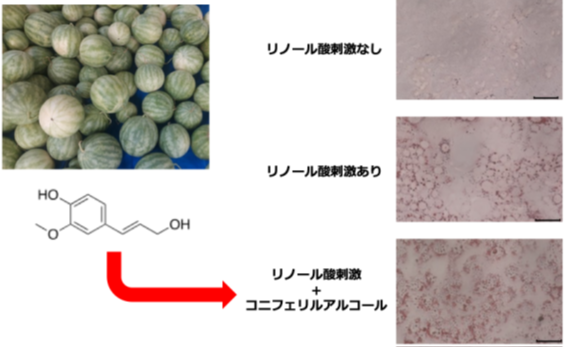
<p>A research group led by Associate Professor Tomohiro Itoh of the Graduate School of Bioresources, Mie University, Professor Takashi Fukuda of Kindai University (Faculty of Agriculture), and Mr. Toshihiro Hagiwara, President of Hagiwara Farm Co., Ltd. (Tawaramoto, Nara), has discovered that coniferyl alcohol isolated from watermelon (Citrullus mucosospermus (Fursa)) exhibits a sebum synthesis-promoting effect in human sebaceous gland cells (SZ95 cell line).<br />The Citrullus mucosospermus (Fursa) is a unique cultivar independently developed by Hagiwara Farm Co., Ltd., characterized by white, non-sweet flesh and high drought tolerance. Based on these findings, the research group plans to advance the development of cosmetic ingredients utilizing seed watermelon.</p>
<p>These research findings were published online in Molecules (Vol. 30, August 2, 2025; <a href="https://doi.org/10.3390/molecules30163360">https://doi.org/10.3390/molecules30163360</a>) and presented at the 72nd Annual Meeting of the Japanese Society for Food Science and Technology, held from August 26 to 29, 2025.</p>
<p style="text-align: center;"><img src="https://www.mie-u.ac.jp/en/R-navi/release/files/%E4%B9%BE%E7%87%A5%E3%81%AE%E5%AD%A3%E7%AF%80%E3%81%AB%E8%B2%A0%E3%81%91%E3%81%AA%E3%81%84%E8%82%8C%E3%81%B8%E3%80%81%E3%82%B9%E3%82%A4%E3%82%AB%E3%81%AE%E5%8A%9B_%E7%94%BB%E5%83%8F_20251111.png" alt="乾燥の季節に負けない肌へ、スイカの力 〜皮膚のバリア機能を助け、乾燥対策に新たな可能性を示す研究成果〜" width="350" /></p>
<p style="text-align: center;"></p>
<h2><br /><span style="color: #008000;">Researcher information</span></h2>
<p><img src="https://www.mie-u.ac.jp/en/R-navi/release/files/%E4%BC%8A%E8%97%A4%E6%99%BA%E5%BA%83%E5%85%88%E7%94%9F_20251111.png" alt="伊藤智広先生" width="150" /></p>
<p><span class="bold">ITO Tomohiro</span><br />　Graduate School of Bioresources Associate Professor</p>
<p><span class="bold">Specialized area：</span><br />　Medicinal Resource Chemistry, Food Functional Chemistry</p>
<p><span class="bold">Current research field：<br /></span>・Research to discover materials for pharmaceuticals, fragrances, cosmetics, and health foods from natural resources<br />・Research on information transmission via extracellular vesicles in bone metabolism and skin homeostasis mechanisms</p>]]>
        
    </content>
</entry>

<entry>
    <title>New Technology Supporting the Fattening of Japanese Black Cattle: Predicting Digestive Efficiency from Feces through Science and AI - PRESS RELEASE</title>
    <link rel="alternate" type="text/html" href="https://www.mie-u.ac.jp/en/R-navi/release/bio/new-technology-supporting-the-fattening-of-japanese-black-cattle-predicting-digestive-efficiency-fro.html" />
    <id>tag:www.mie-u.ac.jp,2025:/en/R-navi/release//97.14438</id>
    <published>2025-10-31T04:40:32Z</published>
    <updated>2025-10-31T04:41:36Z</updated>
    <summary>Summary of our research Researchers led ...</summary>

    
        <category term="Bioresources" scheme="http://www.sixapart.com/ns/types#category" />
    
    
    <content type="html" xml:lang="en-us" xml:base="https://www.mie-u.ac.jp/en/R-navi/release/">
        <![CDATA[<h3><span style="color: #008000;">Summary of our research</span></h3>
<p></p>
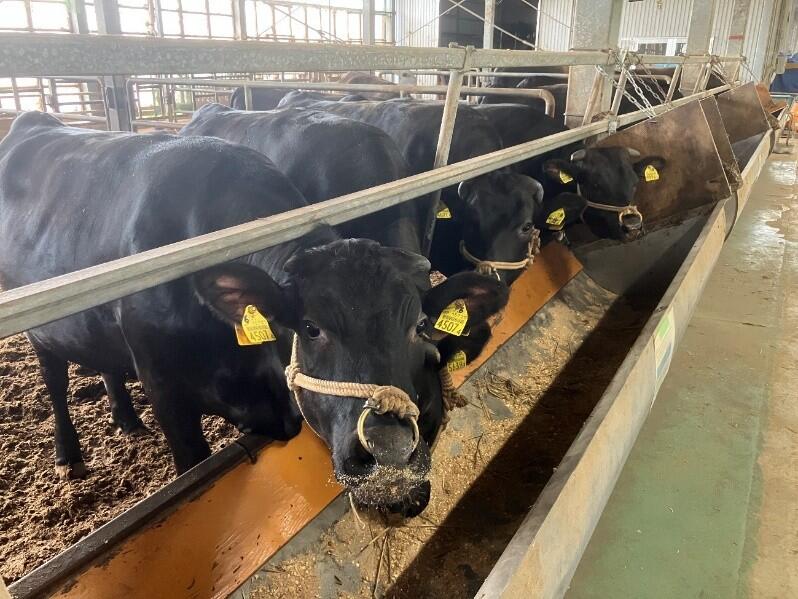
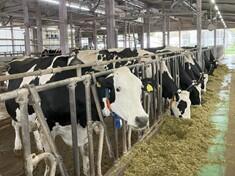
<p>Researchers led by Masaya Matamura, a doctoral student in the Graduate School of Bioresources at Mie University, and Associate Professor Makoto Kondo have developed a new method to predict how efficiently cattle digest feed, using a novel technology based on fecal analysis of Japanese Black cattle.<br />Japanese Black cattle (Wagyu), prized for their highly marbled beef, are raised throughout Japan, but rising feed costs have become a major issue in production. Because Wagyu obtain much of the energy needed for fattening from starch, maintaining a high digestion efficiency is vital for productive breeding. However, there had previously been no practical way to measure digestion efficiency in farm-raised cattle.<br />Over a five-year study conducted at multiple research farms, the team analyzed in detail the feed intake and fecal composition of 116 Japanese Black cattle. As a result, they successfully established a new method for predicting digestion efficiency based on the starch concentration remaining in feces.<br />In addition, the researchers demonstrated the potential of rapid measurement techniques using near-infrared spectroscopy, as well as innovative survey methods that estimate digestive efficiency from smartphone images of feces, reducing the time and labor required for chemical analysis.<br />This research opens the way for scientifically evaluating feed utilization in Wagyu, paving the path toward smarter feed design and more efficient Wagyu production. <br />The main findings were published on October 9, 2025, in the international scientific journal Scientific Reports.</p>
<p style="text-align: center;"><img src="https://www.mie-u.ac.jp/en/R-navi/release/files/20250801_%E8%BF%91%E8%97%A4%E5%85%88%E7%94%9F%E3%83%AA%E3%83%AA%E3%83%BC%E3%82%B9%EF%BC%88%E7%89%9B%EF%BC%89.jpg" alt="20250801_近藤先生リリース（牛）.jpg" width="400" /><br />【Mie Prefectural Livestock Research Center】</p>
<p style="text-align: center;"></p>
<h2><br /><span style="color: #008000;">Researcher information</span></h2>
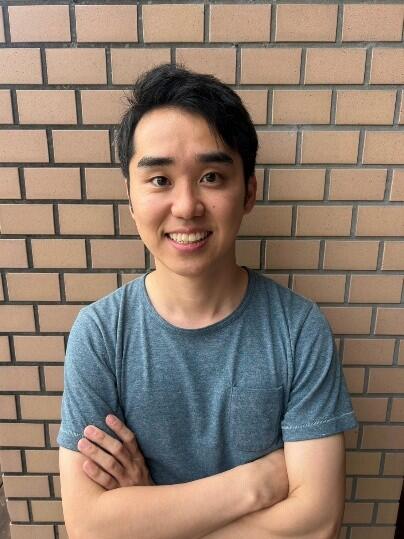
<p><img src="https://www.mie-u.ac.jp/en/R-navi/release/files/20250801_%E8%BF%91%E8%97%A4%E5%85%88%E7%94%9F%E3%83%AA%E3%83%AA%E3%83%BC%E3%82%B9%EF%BC%88%E8%82%A1%E6%9D%91%EF%BC%89.jpg" alt="20250801_近藤先生リリース（股村）.jpg" width="150" /></p>
<p><span class="bold">MASAYA Matamura</span><br />　Ph.D. student, Graduate School of Bioresources</p>
<p><span class="bold">Specialized area：</span><br />　Animal nutrition, near-infrared spectroscopy, machine learning (deep learning)</p>
<p><span class="bold">Current research field：</span><br />　Rapid estimation of starch content in cattle feces using near-infrared spectroscopy and machine learning<br /><br /></p>
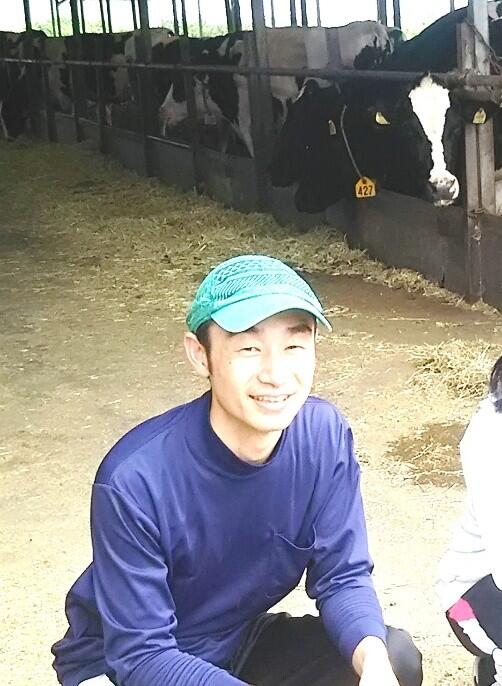
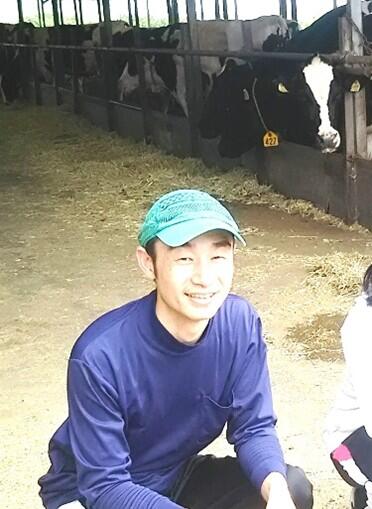
<p><img src="https://www.mie-u.ac.jp/en/R-navi/release/files/20250801_%E8%BF%91%E8%97%A4%E5%85%88%E7%94%9F%E3%83%AA%E3%83%AA%E3%83%BC%E3%82%B9%EF%BC%88%E8%BF%91%E8%97%A4%EF%BC%89.jpg" alt="20250801_近藤先生リリース（近藤）.jpg" width="150" /></p>
<p><span class="bold">MAKOTO Kondo</span><br />　Graduate School of Bioresources Associate Professor</p>
<p><span class="bold">Specialized area：</span><br />　Animal Feed Science, Ruminant Nutrition</p>
<p><span class="bold">Current research field：<br /></span>・Estimation of starch digestibility in dairy and beef cattle<br />・Nutritional evaluation of food by-products as ruminant feeds</p>]]>
        
    </content>
</entry>

<entry>
    <title>Gut Bacteria and Kidney Damage: A Breakthrough for Diabetic Kidney Disease - PRESS RELEASE</title>
    <link rel="alternate" type="text/html" href="https://www.mie-u.ac.jp/en/R-navi/release/medic/gut-bacteria-and-kidney-damage-a-breakthrough-for-diabetic-kidney-disease.html" />
    <id>tag:www.mie-u.ac.jp,2025:/en/R-navi/release//97.14351</id>
    <published>2025-08-26T01:40:58Z</published>
    <updated>2025-08-26T02:05:09Z</updated>
    <summary>Summary of our research Chronic kidney d...</summary>

    
        <category term="Medicine" scheme="http://www.sixapart.com/ns/types#category" />
    
    
    <content type="html" xml:lang="en-us" xml:base="https://www.mie-u.ac.jp/en/R-navi/release/">
        <![CDATA[<h3><span style="color: #008000;">Summary of our research</span></h3>
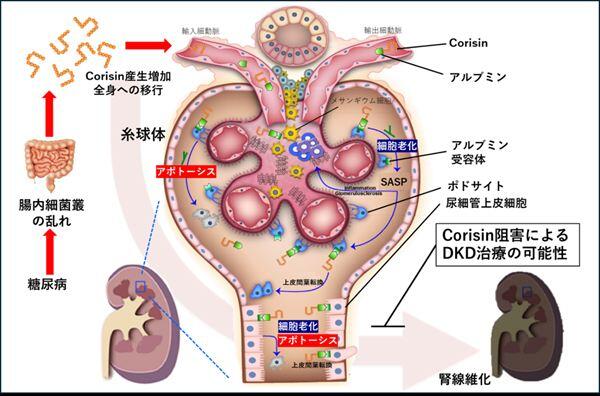
<p>Chronic kidney disease (CKD) is one of the most serious complications of diabetes, often leading to kidney failure due to scarring (fibrosis). Alarmingly, there are still no effective treatments to halt this destructive process.<br />Now, our groundbreaking research has uncovered a surprising villain: corisin, a tiny molecule made by certain gut bacteria. We found that people with diabetic kidney disease have significantly higher levels of corisin -- and the worse their kidney function, the more corisin they had.<br />What does corisin do? It wreaks havoc on kidney cells, triggering inflammation, premature aging, and cell death, all of which accelerate scarring. Even more remarkably, it travels through the bloodstream by binding to a common protein, albumin, helping it infiltrate the kidneys.<br />But there's hope. We developed an antibody that blocks corisin, and in diabetic mice, it worked. Kidney damage was reduced, and kidney function improved.<br />This discovery reveals a powerful new link between the gut and kidneys, and offers a promising path toward new treatments for millions of people living with diabetic kidney disease.</p>
<p></p>
<p style="text-align: center;"><img src="https://www.mie-u.ac.jp/en/R-navi/release/files/%E7%B3%96%E5%B0%BF%E7%97%85%E9%96%A2%E9%80%A3%E8%85%8E%E8%87%93%E7%97%85%E3%81%AE%E6%96%B0%E3%81%9F%E3%81%AA%E9%80%B2%E5%B1%95%E3%83%A1%E3%82%AB%E3%83%8B%E3%82%BA%E3%83%A0%E3%82%92%E8%A7%A3%E6%98%8E_%E7%94%BB%E5%83%8F1_R.jpg" alt="Research Illustrations" width="600" /><br />Summary of research findings</p>
<div class="row mt-5 mb-5 justify-content-center">
<div class="col-md-7"></div>
</div>
<h3><span style="color: #008000;">Researcher information</span></h3>
<div class="row my-2">
<div class="col-md-5"><img src="https://www.mie-u.ac.jp/en/R-navi/release/files/%E5%AE%89%E9%96%93%E5%A4%AA%E9%83%8E%E5%85%88%E7%94%9F_20250826_R.jpg" alt="安間太郎先生_20250826_R.jpg" width="150" /></div>
</div>
<p class="mb-0"><span class="bold">Taro Yasuma</span></p>
<p class="ml-3">Assistant Professor, Department of Diabetes &amp; Endocrinology/ Department of Immunology, Mie University Graduate School of Medicine</p>
<p class="mb-0"><span class="bold">Specialized area</span>:</p>
<p class="ml-3">Diabetes, Endocrinology, Immunology</p>
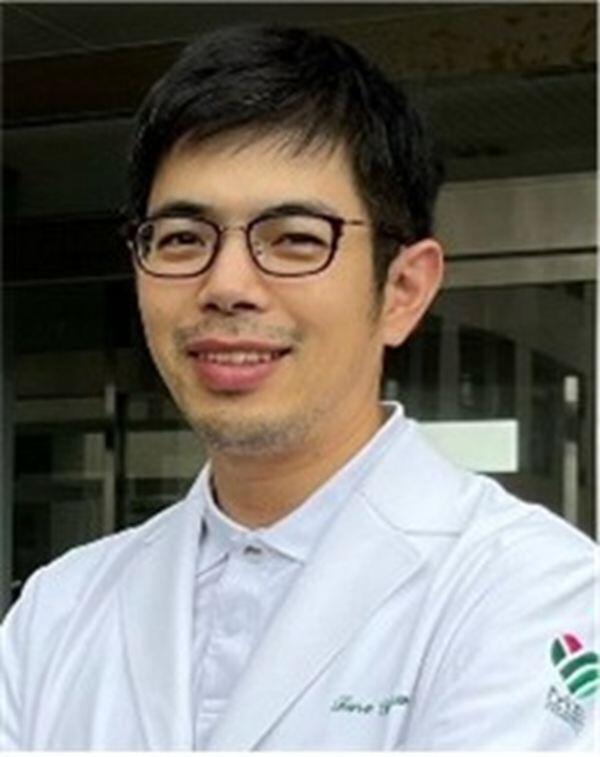
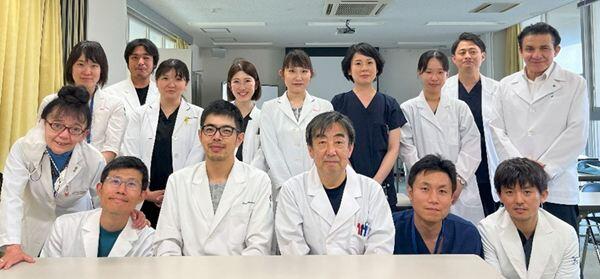
<p class="ml-3" style="text-align: center;"><img src="https://www.mie-u.ac.jp/en/R-navi/release/files/%E7%B3%96%E5%B0%BF%E7%97%85%E9%96%A2%E9%80%A3%E8%85%8E%E8%87%93%E7%97%85%E3%81%AE%E6%96%B0%E3%81%9F%E3%81%AA%E9%80%B2%E5%B1%95%E3%83%A1%E3%82%AB%E3%83%8B%E3%82%BA%E3%83%A0%E3%82%92%E8%A7%A3%E6%98%8E_%E7%94%BB%E5%83%8F2_R.jpg" width="600" alt="免疫学講座の研究グループ" /></p>
<p class="ml-3" style="text-align: center;"></p>
<div class="row mt-5 mb-1">
<div class="col-md-5"></div>
</div>
<div class="row mt-5 mb-1">
<div class="col-md-5"></div>
</div>]]>
        
    </content>
</entry>

<entry>
    <title>DCollaboration Among Universities, Agricultural Colleges, and Companies -- Exploring the Potential of Using Castella Cake Trimmings as Dairy Cow Feed -- - PRESS RELEASE</title>
    <link rel="alternate" type="text/html" href="https://www.mie-u.ac.jp/en/R-navi/release/bio/dcollaboration-among-universities-agricultural-colleges-and-companies-exploring-the-potential-of-usi.html" />
    <id>tag:www.mie-u.ac.jp,2025:/en/R-navi/release//97.14340</id>
    <published>2025-08-07T00:34:34Z</published>
    <updated>2025-08-07T01:33:17Z</updated>
    <summary>Summary of our research Mie University, ...</summary>

    
        <category term="Bioresources" scheme="http://www.sixapart.com/ns/types#category" />
    
    
    <content type="html" xml:lang="en-us" xml:base="https://www.mie-u.ac.jp/en/R-navi/release/">
        <![CDATA[<h3><span style="color: #008000;">Summary of our research</span></h3>
<p></p>
<p>Mie University, Aichi Prefectural Agricultural College, and Kankyo Tekushisu Co., Ltd. collaborated to investigate the effects of partially replacing imported corn, which is commonly used as dairy cow feed, with by-products from Castella cake. <br />These by-products, such as trimmings generated during the manufacturing process, account for about 10% of the total Castella production. <br />Despite being manufacturing by-products, they are rich in sugars and starches, suggesting promising potential for effective use. <br />In this study, dairy cows were fed Castella by-products, and the digestibility of nutrients, milk yield, and milk components were thoroughly evaluated.<br /> The results revealed that even when Castella by-products were used instead of corn, there were no differences in milk yield or composition, and furthermore, the digestibility of certain nutrients, such as fiber, actually improved. Effective utilization of food by-products is expected to help reduce both feed costs and food waste.<br /> The research was published in the international journal "Animal Science Journal" on July 22, 2025.<br /><a href="https://onlinelibrary.wiley.com/doi/10.1111/asj.70086">https://onlinelibrary.wiley.com/doi/10.1111/asj.70086</a></p>
<p></p>
<p style="text-align: center;"><img src="https://www.mie-u.ac.jp/en/R-navi/release/files/%E5%A4%A7%E5%AD%A6%C3%97%E8%BE%B2%E6%A5%AD%E5%A4%A7%E5%AD%A6%E6%A0%A1%C3%97%E4%BC%81%E6%A5%AD%E3%81%8C%E9%80%A3%E6%90%BA%E3%80%80%EF%BD%9E%E3%82%AB%E3%82%B9%E3%83%86%E3%83%A9%E3%81%AE%E5%88%87%E3%82%8C%E7%AB%AF%E3%81%A7%E4%B9%B3%E7%89%9B%E9%A3%BC%E6%96%99%E3%81%AE%E5%8F%AF%E8%83%BD%E6%80%A7%E3%82%92%E6%A4%9C%E8%A8%BC%EF%BD%9E_%E7%94%BB%E5%83%8F.jpg" alt="大学×農業大学校×企業が連携　～カステラの切れ端で乳牛飼料の可能性を検証～_画像.jpg" width="400" /><br />【Aichi Prefectural Agricultural College】</p>
<h2><br /><span style="color: #008000;">Researcher information</span></h2>
<p><img src="https://www.mie-u.ac.jp/en/R-navi/release/files/20250801_%E8%BF%91%E8%97%A4%E5%85%88%E7%94%9F%E3%83%AA%E3%83%AA%E3%83%BC%E3%82%B9%EF%BC%88%E8%BF%91%E8%97%A4%EF%BC%89.jpg" alt="20250801_近藤先生リリース（近藤）.jpg" width="150" /></p>
<p><span class="bold">MAKOTO Kondo</span><br />　Graduate School of Bioresources Associate Professor</p>
<p><span class="bold">Specialized area：</span><br />　Animal Feed Science, Ruminant Nutrition</p>
<p><span class="bold">Current research field：<br /></span>・Estimation of starch digestibility in dairy and beef cattle<br />・Nutritional evaluation of food by-products as ruminant feeds</p>]]>
        
    </content>
</entry>

<entry>
    <title>Development of a Method to Assess Nutritional Loss in Beef Cattle from Small Urine Samples --Efficient and Accurate Measurement of Protein Utilization-- - PRESS RELEASE</title>
    <link rel="alternate" type="text/html" href="https://www.mie-u.ac.jp/en/R-navi/release/bio/development-of-a-method-to-assess-nutritional-loss-in-beef-cattle-from-small-urine-samples-efficient.html" />
    <id>tag:www.mie-u.ac.jp,2025:/en/R-navi/release//97.14332</id>
    <published>2025-08-01T00:41:03Z</published>
    <updated>2025-08-01T01:13:04Z</updated>
    <summary>Summary of our research A research group...</summary>

    
        <category term="Bioresources" scheme="http://www.sixapart.com/ns/types#category" />
    
    
    <content type="html" xml:lang="en-us" xml:base="https://www.mie-u.ac.jp/en/R-navi/release/">
        <![CDATA[<h3><span style="color: #008000;">Summary of our research</span></h3>
<p></p>
<p>A research group led by doctoral candidate Masaya Matamura and Associate Professor Makoto Kondo at the Graduate School of Bioresources, Mie University, has developed a new method to estimate daily urine output and nitrogen excretion in beef cattle using only small urine samples.<br />As livestock feed prices rise, improving feed utilization efficiency is crucial for a stable domestic beef supply. When cattle feed is not nutritionally balanced, protein is not effectively used and is excreted as nitrogen compounds, such as ammonia, in urine. Reducing environmental nitrogen emissions is thus essential. However, collecting all urine excreted by cattle over 24 hours is labor-intensive, limiting protein utilization studies.<br />The research focused on Japanese Black cattle (Wagyu), using creatinine excretion as a marker to estimate daily urine volume from small samples. By analyzing samples collected over 125 days from seven cattle, the team demonstrated that this new method provides results as accurate as conventional full collection techniques.<br />This method is expected to advance studies aimed at optimizing cattle feed nutrition and reducing livestock's environmental impact. The research was published in the international journal "animal" on July 3, 2025.</p>
<p style="text-align: center;"><img src="https://www.mie-u.ac.jp/en/R-navi/release/files/20250801_%E8%BF%91%E8%97%A4%E5%85%88%E7%94%9F%E3%83%AA%E3%83%AA%E3%83%BC%E3%82%B9%EF%BC%88%E7%89%9B%EF%BC%89.jpg" alt="20250801_近藤先生リリース（牛）.jpg" width="400" /><br />【Mie Prefectural Livestock Research Center】</p>
<h2><br /><span style="color: #008000;">Researcher information</span></h2>
<p><img src="https://www.mie-u.ac.jp/en/R-navi/release/files/20250801_%E8%BF%91%E8%97%A4%E5%85%88%E7%94%9F%E3%83%AA%E3%83%AA%E3%83%BC%E3%82%B9%EF%BC%88%E8%82%A1%E6%9D%91%EF%BC%89.jpg" alt="20250801_近藤先生リリース（股村）.jpg" width="150" /></p>
<p><span class="bold">MASAYA Matamura</span><br />　Ph.D. student, Graduate School of Bioresources</p>
<p><span class="bold">Specialized area：</span><br />　Animal nutrition, near-infrared spectroscopy, machine learning (deep learning)</p>
<p><span class="bold">Current research field：</span><br />　Rapid estimation of starch content in cattle feces using near-infrared spectroscopy and machine learning<br /><br /></p>
<p><img src="https://www.mie-u.ac.jp/en/R-navi/release/files/20250801_%E8%BF%91%E8%97%A4%E5%85%88%E7%94%9F%E3%83%AA%E3%83%AA%E3%83%BC%E3%82%B9%EF%BC%88%E8%BF%91%E8%97%A4%EF%BC%89.jpg" alt="20250801_近藤先生リリース（近藤）.jpg" width="150" /></p>
<p><span class="bold">MAKOTO Kondo</span><br />　Graduate School of Bioresources Associate Professor</p>
<p><span class="bold">Specialized area：</span><br />　Animal Feed Science, Ruminant Nutrition</p>
<p><span class="bold">Current research field：<br /></span>・Estimation of starch digestibility in dairy and beef cattle<br />・Nutritional evaluation of food by-products as ruminant feeds</p>]]>
        
    </content>
</entry>

<entry>
    <title>Toward the Theoretical Framework of Organic Rice Production         Soil Microbial Communities Generated by Topography Greatly Influence Organic Rice Productivity - PRESS RELEASE</title>
    <link rel="alternate" type="text/html" href="https://www.mie-u.ac.jp/en/R-navi/release/bio/toward-the-theoretical-framework-of-organic-rice-production-soil-microbial-communities-generated-by-.html" />
    <id>tag:www.mie-u.ac.jp,2025:/en/R-navi/release//97.14304</id>
    <published>2025-07-17T05:34:49Z</published>
    <updated>2025-07-17T06:27:30Z</updated>
    <summary>Summary of our research A research group...</summary>

    
        <category term="Bioresources" scheme="http://www.sixapart.com/ns/types#category" />
    
    
    <content type="html" xml:lang="en-us" xml:base="https://www.mie-u.ac.jp/en/R-navi/release/">
        <![CDATA[<h3><span style="color: #008000;">Summary of our research</span></h3>
<p>A research group led by Professor Nobuhito Sekiya and Professor Kunio Watanabe from the Graduate School of Bioresources, Mie University, Associate Professor Shunsuke Ichikawa from the Graduate School of Education, Mie University, and Lecturer Mchuno Alfred Peter from the College of Agriculture and Food Engineering, University of Dar es Salaam, discovered that variations in soil microbial communities created by topography significantly contribute to organic rice productivity. The research group conducted soil microbial analysis, soil incubation experiments, and on-farm trials in the valley bottom and hillslope of Kaya Valley in Yosano Town, Kyoto Prefecture. The results revealed that valley bottom fields had lower proportions of genes involved in microbial denitrification and ammonia utilization compared to hillslopes, indicating more efficient utilization of nitrogen from organic fertilizers by rice plants. On-farm trials confirmed that valley bottom fields supplied nitrogen to rice more efficiently than hillslopes, ultimately improving brown rice yield. This is the first study to demonstrate the necessity of considering topography-induced soil microbial communities when producing organic rice.</p>
<p>These findings were published online in the international academic journal Scientific Reports on July 10, 2025.<br /><a href="https://doi.org/10.1038/s41598-025-09111-x">https://doi.org/10.1038/s41598-025-09111-x</a></p>
<p></p>
<p></p>
<h2><br /><span style="color: #008000;">Researcher information</span></h2>
<p><img src="https://www.mie-u.ac.jp/en/R-navi/release/files/%E6%B0%B4%E7%A8%B2%E3%81%AB%E7%A7%98%E3%82%81%E3%82%89%E3%82%8C%E3%81%9F%E6%9C%AA%E7%9F%A5%E3%81%AE%E8%83%BD%E5%8A%9B%E3%82%92%E8%A7%A3%E3%81%8D%E6%98%8E%E3%81%8B%E3%81%99%20%281%29_R.jpg" alt="水稲に秘められた未知の能力を解き明かす (1)_R.jpg" width="150" height="200" /></p>
<p><span class="bold">SEKIYA Nobuhito</span><br />　Graduate School of Bioresources Professor</p>
<p><span class="bold">Specialized area：</span><br />　Crop Science</p>
<p><span class="bold">Current research field：</span><br />　Sustainable Rice Production (Organic Rice Farming)<br /><br /></p>
<p><img src="https://www.mie-u.ac.jp/en/R-navi/release/files/%E6%B8%A1%E8%BE%BA%E6%99%8B%E7%94%9F%E5%85%88%E7%94%9F_250717.jpg" alt="渡辺晋生先生_250717.jpg" width="150" /></p>
<p><span class="bold">WATANABE Kunio</span><br />　Graduate School of Bioresources Professor</p>
<p><span class="bold">Specialized area：</span><br />　Soil Physics and Hydrology</p>
<p><span class="bold">Current research field：<br /></span> Fate of nitrogen and carbon in agricultural fields<br /> Utilization of frozen soil and ground freezing<br /> Water, heat and solute transport in soil during freeze-thaw processes<br /><br /><br /><img src="https://www.mie-u.ac.jp/en/R-navi/release/files/%E5%B8%82%E5%B7%9D%E4%BF%8A%E8%BC%94%E5%85%88%E7%94%9F_250717.jpg" alt="市川俊輔先生_250717.jpg" width="150" /></p>
<p><span class="bold">ICHIKAWA Shunsuke</span><br />　Faculty of Education Associate Professor</p>
<p><span class="bold">Specialized area：</span><br />　Biochemistry, Applied Microbiology</p>
<p><span class="bold">Current research field：<br /></span> Elucidation of the crucial functions collaboratively performed by diverse microorganisms in soil, the gut, fermented foods, and other environments.</p>]]>
        
    </content>
</entry>

<entry>
    <title>Improving Rice Production Technology in Sub-Saharan Africa!! New Discovery Overturns the Common Belief that &quot;Fertilizer × Irrigation = Increased Yield&quot; - PRESS RELEASE</title>
    <link rel="alternate" type="text/html" href="https://www.mie-u.ac.jp/en/R-navi/release/bio/improving-rice-production-technology-in-sub-saharan-africa-new-discovery-overturns-the-common-belief.html" />
    <id>tag:www.mie-u.ac.jp,2025:/en/R-navi/release//97.14289</id>
    <published>2025-07-08T00:58:43Z</published>
    <updated>2025-07-08T02:14:50Z</updated>
    <summary>Summary of our research In Africa, rice ...</summary>

    
        <category term="Bioresources" scheme="http://www.sixapart.com/ns/types#category" />
    
    
    <content type="html" xml:lang="en-us" xml:base="https://www.mie-u.ac.jp/en/R-navi/release/">
        <![CDATA[<h3><span style="color: #008000;">Summary of our research</span></h3>
<p>In Africa, rice accounts for approximately 30% of cereal consumption and is the second most important cereal crop after maize. Rice consumption is increasing across Africa, making increased rice production critically important for reducing hunger. Sub-Saharan Africa consists largely of semi-arid regions where, unlike Japan's flooded paddy fields, rice is primarily grown in rainfed conditions (rainfed lowland or upland rice cultivation) across extensive cultivated areas. To increase rice production, proper management of fertilizers and water resources for upland rice is essential. A research group conducted upland rice cultivation trials over two years in semi-arid Kenya and discovered that maximum yield was achieved with 7.5 kg of nitrogen fertilizer per 10a (0.1 hectare), while increasing nitrogen fertilizer to 15 kg actually decreased yield. Even more surprising, contrary to the general belief that combining nitrogen fertilizer with irrigation increases yield, they demonstrated that "high nitrogen × irrigation" actually promotes yield reduction and elucidated the underlying mechanisms.</p>
<p>These new findings challenge the conventional wisdom that the combination of fertilizer and irrigation produces synergistic effects. The results of this research were published online in the international academic journal Field Crops Research on June 6, 2025.</p>
<p></p>
<h2><br /><span style="color: #008000;">Researcher information</span></h2>
<p><img src="https://www.mie-u.ac.jp/en/R-navi/release/files/%E6%B0%B4%E7%A8%B2%E3%81%AB%E7%A7%98%E3%82%81%E3%82%89%E3%82%8C%E3%81%9F%E6%9C%AA%E7%9F%A5%E3%81%AE%E8%83%BD%E5%8A%9B%E3%82%92%E8%A7%A3%E3%81%8D%E6%98%8E%E3%81%8B%E3%81%99%20%281%29_R.jpg" alt="水稲に秘められた未知の能力を解き明かす (1)_R.jpg" width="150" height="200" /></p>
<p><span class="bold">SEKIYA Nobuhito</span><br />　Graduate School of Bioresources Professor</p>
<p><span class="bold">Specialized area：</span><br />　Crop Science</p>
<p><span class="bold">Current research field：</span><br />　Sustainable Rice Production (Organic Rice Farming)<br /><br /></p>
<p><img src="https://www.mie-u.ac.jp/en/R-navi/release/files/%E8%BF%91%E8%97%A4%E8%AA%A0%E5%85%88%E7%94%9F_20250708.jpg" alt="近藤誠先生_20250708.jpg" width="150" /></p>
<p><span class="bold">KONDO Makoto</span><br />　Graduate School of Bioresources Associate Professor</p>
<p><span class="bold">Specialized area：</span><br />　Animal Science</p>
<p><span class="bold">Current research field：</span><br />　Nutritive evaluation of ruminant feed</p>]]>
        
    </content>
</entry>

<entry>
    <title>First Chromosome-Level Genome Assembly of the &quot;Doctor Fish&quot;! --A Promising New Model Organism for Human Disease Research-- - PRESS RELEASE</title>
    <link rel="alternate" type="text/html" href="https://www.mie-u.ac.jp/en/R-navi/release/medic/first-chromosome-level-genome-assembly-of-the-doctor-fish-a-promising-new-model-organism-for-human-d.html" />
    <id>tag:www.mie-u.ac.jp,2025:/en/R-navi/release//97.14250</id>
    <published>2025-05-12T07:03:58Z</published>
    <updated>2025-05-12T07:22:02Z</updated>
    <summary>Summary of our research An international...</summary>

    
        <category term="Medicine" scheme="http://www.sixapart.com/ns/types#category" />
    
    
    <content type="html" xml:lang="en-us" xml:base="https://www.mie-u.ac.jp/en/R-navi/release/">
        <![CDATA[<h3><span style="color: #008000;">Summary of our research</span></h3>
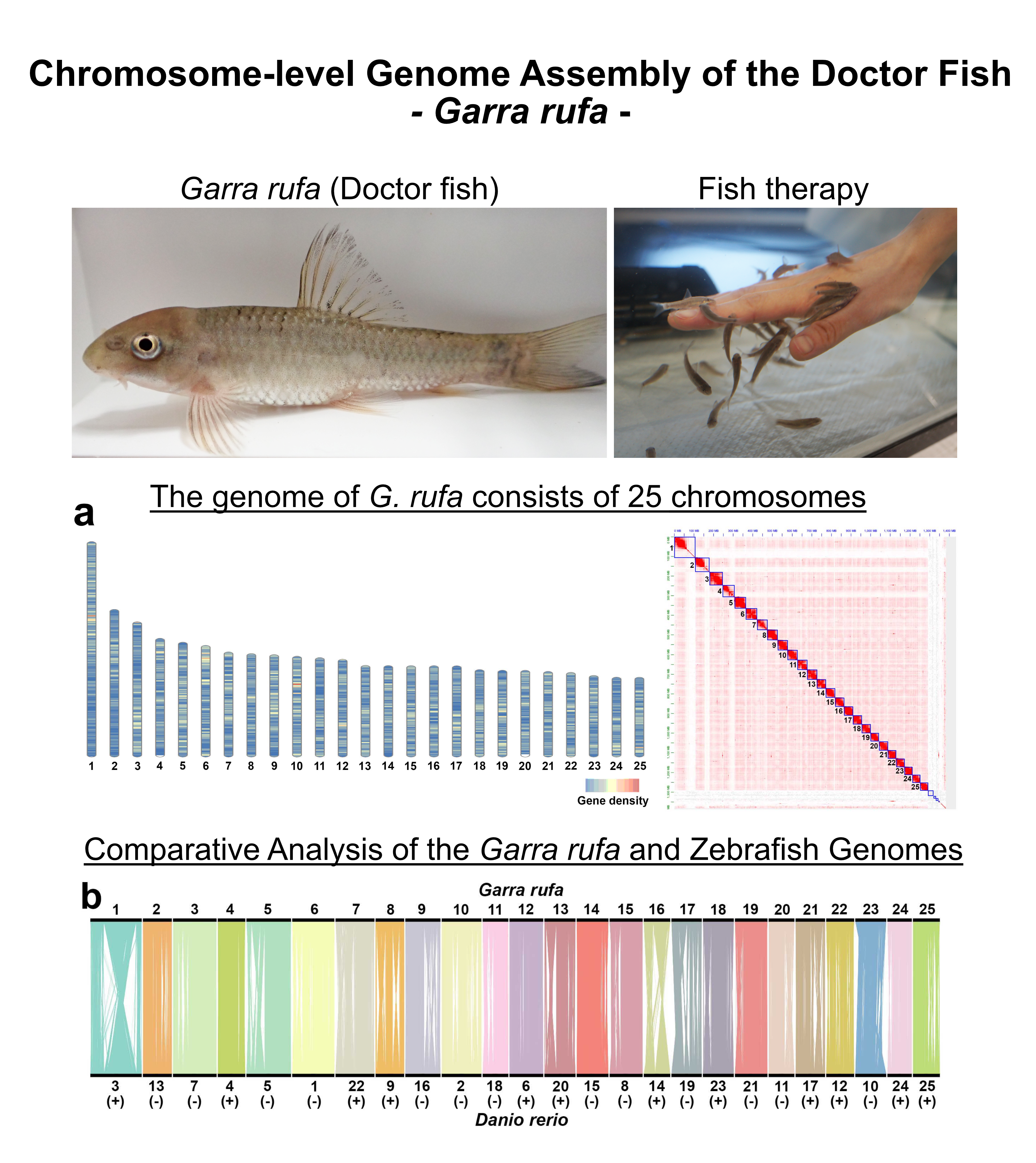
<p>An international research team led by Dr. Yasuhito Shimada (Lecturer, Graduate School of Medicine, Mie University), in collaboration with institutions in Japan, Indonesia, and Austria, has successfully decoded the genome of Garra rufa--commonly known as the "doctor fish"--at the chromosome level for the first time in the world. G. rufa is a freshwater fish capable of surviving in environments above 37°C and is gaining attention as a potential model organism for studying human diseases, including cancer xenografts and infectious diseases under high-temperature conditions.<br />The study revealed that the genome of G. rufa is approximately 1.38 gigabases (Gb) in size and consists of 25 chromosomes. Furthermore, researchers identified the genomic locations of genes related to heat shock proteins (HSPs) and heat shock factors (HSFs), which are essential for high-temperature tolerance. This genomic information provides a critical foundation for developing G. rufa as a novel experimental model in biomedical research.<br />Additionally, the availability of this high-quality genome will allow comparative genomic analyses with established model organisms such as zebrafish, expanding the possibilities for functional gene analysis and genome editing applications. The genome of G. rufa opens new avenues for the development of human disease models, particularly in oncology and infectious disease research, under physiologically relevant thermal conditions.</p>
<p style="text-align: center;"><img src="https://www.mie-u.ac.jp/en/R-navi/release/files/%E3%80%8E%E3%83%89%E3%82%AF%E3%82%BF%E3%83%BC%E3%83%95%E3%82%A3%E3%83%83%E3%82%B7%E3%83%A5%E3%80%8F%E3%81%AE%E3%82%B2%E3%83%8E%E3%83%A0%E3%82%92%E4%B8%96%E7%95%8C%E5%88%9D%E8%A7%A3%E8%AA%AD%EF%BC%81_%E7%94%BB%E5%83%8F.png" alt="『ドクターフィッシュ』のゲノムを世界初解読！_画像" width="400" /></p>
<p>This work was published online in the Scientific Data on May 9th, 2025.</p>
<p><a href="https://www.nature.com/articles/s41597-025-05101-w" class="a-external">https://www.nature.com/articles/s41597-025-05101-w</a></p>
<p></p>
<p></p>
<p></p>
<h2><br /><span style="color: #008000;">Researcher information</span></h2>
<p><img src="https://www.mie-u.ac.jp/en/R-navi/release/files/%E5%B3%B6%E7%94%B0%E5%BA%B7%E4%BA%BA%E5%85%88%E7%94%9F_20250502.jpg" alt="島田康人先生" width="150" /></p>
<p><span class="bold">Yasuhito Shimada</span><br />　Lecturer, Graduate School of Medicine, Mie University <br />　Representative, Mie University Zebrafish Research Center</p>
<p><span class="bold">Specialized area：</span><br />　Integrative Pharmacology; Drug discovery and disease modeling using zebrafish</p>
<p><span class="bold">Current research field：<br /></span>・Development of disease models using zebrafish<br />・Drug discovery research using natural compounds<br />・Establishment of human disease models using the high-temperature-resistant fish Garra rufa</p>]]>
        
    </content>
</entry>

<entry>
    <title>Embryological Cellular Origins and Hypoxia-Mediated Mechanisms in PIK3CA -Driven Refractory Vascular Malformations - PRESS RELEASE</title>
    <link rel="alternate" type="text/html" href="https://www.mie-u.ac.jp/en/R-navi/release/medic/embryological-cellular-origins-and-hypoxia-mediated-mechanisms-in-pik3ca--driven-refractory-vascular.html" />
    <id>tag:www.mie-u.ac.jp,2025:/en/R-navi/release//97.14223</id>
    <published>2025-04-16T04:21:59Z</published>
    <updated>2025-04-16T04:50:25Z</updated>
    <summary>Summary of our research A collaborative ...</summary>

    
        <category term="Medicine" scheme="http://www.sixapart.com/ns/types#category" />
    
    
    <content type="html" xml:lang="en-us" xml:base="https://www.mie-u.ac.jp/en/R-navi/release/">
        <![CDATA[<h3><span style="color: #008000;">Summary of our research</span></h3>
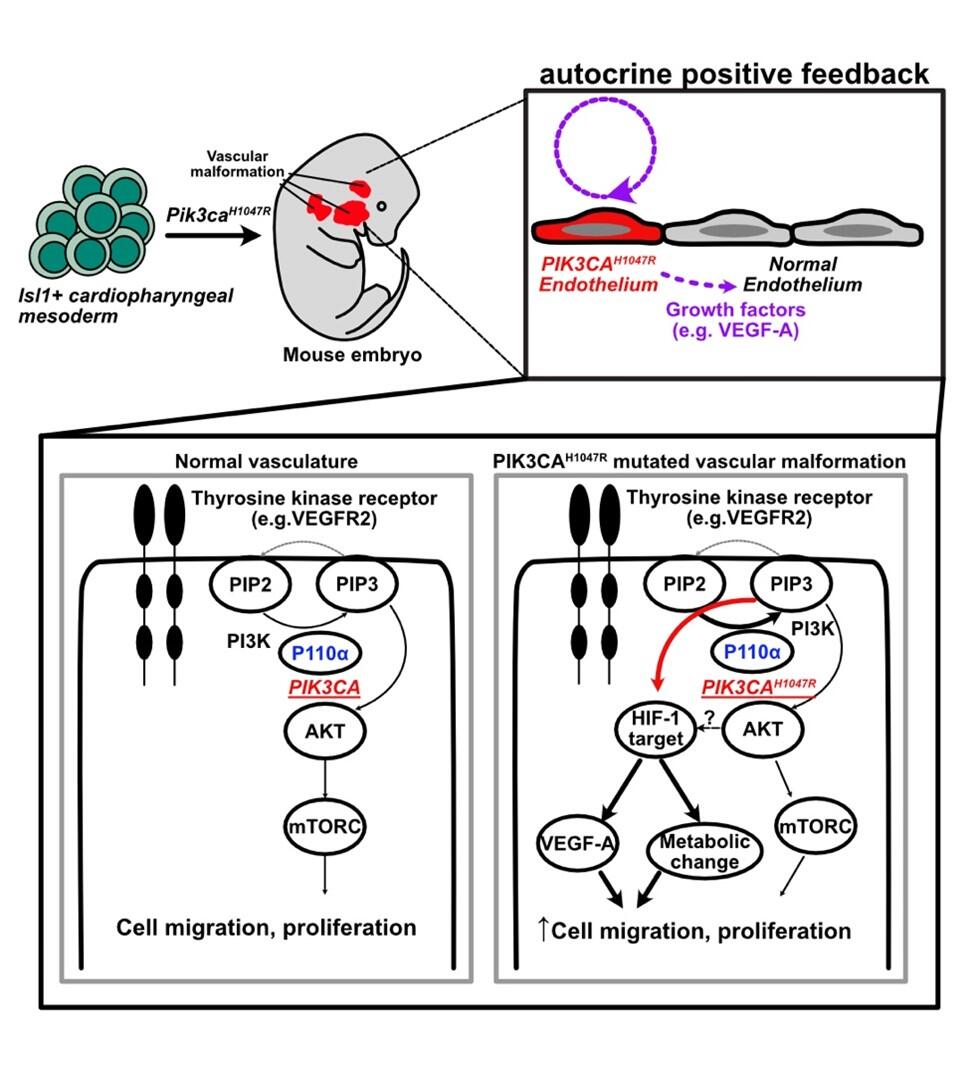
<p>A collaborative research team from Mie University, Osaka University, Keio University, the National Cerebral and Cardiovascular Center, and Kanagawa Children's Medical Center has shown that in refractory vascular malformations driven by the PIK3CA (H1047R) mutation, the lesion site is determined by the embryonic cellular origin. They also discovered that hypoxia signaling is abnormally activated even under normoxic conditions, playing a crucial role in pathogenesis. Using single-cell RNA sequencing and molecular analyses in a mouse model, the researchers observed stabilization of HIF-1α and excessive production of angiogenic factors such as VEGF-A. Furthermore, targeted inhibition of these molecules significantly suppressed the formation of vascular malformations. These findings are expected to substantially enhance our understanding of vascular malformations and pave the way for novel therapeutic strategies. The study was published in EMBO Molecular Medicine in April 16, 2025, 9:00 a.m. Japan time.<br /><br /></p>
<p style="text-align: center;"><img src="https://www.mie-u.ac.jp/en/R-navi/release/files/E%E9%9B%A3%E6%B2%BB%E6%80%A7%E8%84%88%E7%AE%A1%E5%A5%87%E5%BD%A2%E3%81%AE%E7%99%BA%E7%94%9F%E6%A9%9F%E5%BA%8F%E3%81%AE%E8%A7%A3%E6%98%8E_%E7%94%BB%E5%83%8F.jpg" alt="E難治性脈管奇形の発生機序の解明_画像.jpg" width="600" /></p>
<h2><br /><span style="color: #008000;">Researcher information</span></h2>
<p><span class="bold">Kazuaki MARUYAMA</span><br />　Graduate School of Medicine, Department of Regenerative Pathology, Assistant Professor</p>
<p><span class="bold">Areas of Expertise：</span><br />　Cardiovascular pathology, molecular biology, developmental biology, vascular biology, lymphatic vessel biology</p>
<p><span class="bold">Current Research Topic：</span><br />　・Elucidation of the pathogenesis of vascular and lymphatic diseases<br />　・Investigations into the interactions among lymphatic/blood vessels, cancer, and the immune system</p>
<p></p>
<p></p>
<p><span class="bold">Kyoko IMANAKA-YOSHIDA</span></p>
<p><span class="bold">Position at the Time of Research：</span><br />　Department of Regenerative Pathology, Graduate School of Medicine, Professor</p>
<p><span class="bold">Current Position：</span><br />　Department of Cardiology and Nephrology, Graduate School of Medicine, Specially Appointed Professor</p>
<p><span class="bold">Areas of Expertise：</span><br />　Cardiovascular pathology, extracellular matrix</p>
<p><span class="bold">Current Research Topic：</span><br />　・Elucidation of the pathogenesis of myocarditis</p>]]>
        
    </content>
</entry>

<entry>
    <title>Investigation of the diet of Manila clam in natural waters: dietary analysis based on the diatom-specific DNA metabarcoding. - PRESS RELEASE</title>
    <link rel="alternate" type="text/html" href="https://www.mie-u.ac.jp/en/R-navi/release/bio/investigation-of-the-diet-of-manila-clam-in-natural-waters-dietary-analysis-based-on-the-diatom-spec.html" />
    <id>tag:www.mie-u.ac.jp,2025:/en/R-navi/release//97.14213</id>
    <published>2025-04-03T04:34:52Z</published>
    <updated>2025-04-03T10:27:03Z</updated>
    <summary>Summary of our research Assistant Profes...</summary>

    
        <category term="Bioresources" scheme="http://www.sixapart.com/ns/types#category" />
    
    
    <content type="html" xml:lang="en-us" xml:base="https://www.mie-u.ac.jp/en/R-navi/release/">
        <![CDATA[<h3><span style="color: #008000;">Summary of our research</span></h3>
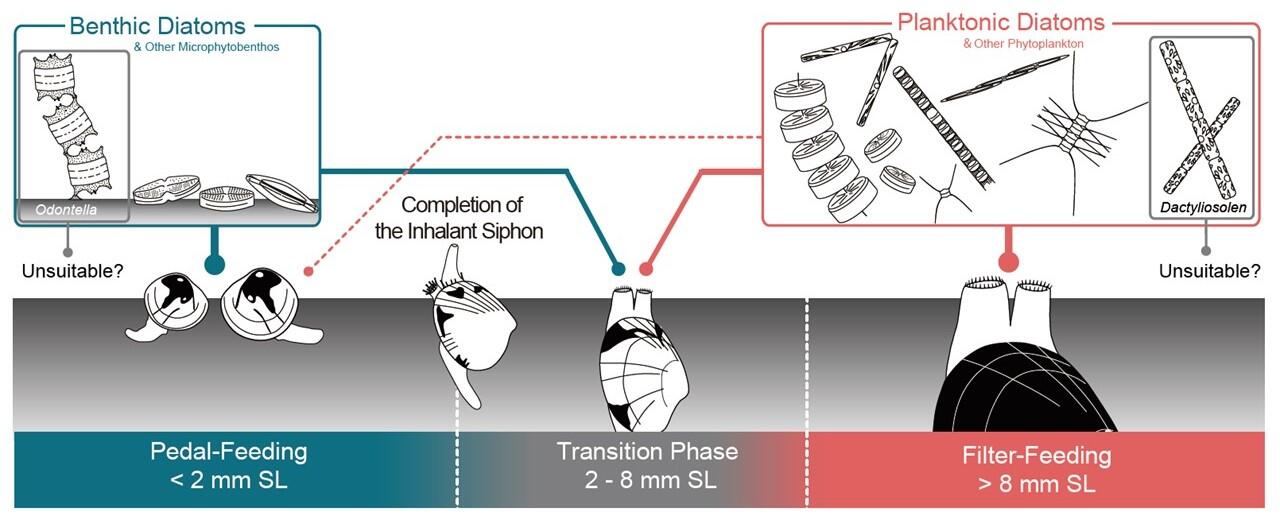
<p>Assistant Professor Shouji Houki and a master student Mana Ozaki (the present affiliation: Himeji City Aquarium) at Graduate School of Bioresources, Mie University applied the Diatom-specific DNA metabarcoding to the dietary analysis of Manila (Asari) clams, and revealed what and how this species feed on in natural waters, and how its feeding habit ontogenically changes. They also revealed that some of the diverse diatoms in the sea water and on the seafloor surrounded clams are not suitable as food for them. These findings are expected to provide indispensable scientific evidence for clarifying the causes of the decline in clam stocks in Japan, formulating measures for the recovery of the stocks, and verifying the effectiveness of these measures.</p>
<p style="text-align: center;"><img src="https://www.mie-u.ac.jp/en/R-navi/release/files/20250403_%E4%BC%AF%E8%80%86%E5%85%88%E7%94%9F%E3%83%AA%E3%83%AA%E3%83%BC%E3%82%B9%E5%9B%B33%26R%E3%83%8A%E3%83%92%E3%82%99%E8%8B%B1%E8%AA%9E.JPG" alt="20250403伯耆先生リリース(英).jpg" width="600" /></p>
<p>Title of paper: Ontogenic shift of feeding habit in Manila clam <i>Ruditapes philippinarum</i> after settlement revealed by diatom specific DNA-metabarcoding diet analysis<br /><a href="https://doi.org/10.1016/j.ecss.2025.109244">https://doi.org/10.1016/j.ecss.2025.109244</a></p>
<h2><br /><span style="color: #008000;">Researcher information</span></h2>
<p>HOUKI Shouji<br />　Assistant Professor, Graduate School of Bioresources</p>
<p><span class="bold">Specialized area：</span><br />　Ecology of marine invertebrates</p>
<p><span class="bold">Current research field：</span><br />　・Feeding ecology of bivalves<br />　・Feeding ecology of skeleton shrimp (<i>Caprella</i>)<br />　・Effect of feeding behaviour of marine benthos on plastic debris on the seafloor<br />　・Development of new aquaculture of the Manila clam using the submarine spring</p>]]>
        
    </content>
</entry>

<entry>
    <title>Innovative Approach Developed for Removing Extra Chromosome 21 in Cells from Individuals with Down Syndrome Using CRISPR-Cas9 Genome Editing Technology - PRESS RELEASE</title>
    <link rel="alternate" type="text/html" href="https://www.mie-u.ac.jp/en/R-navi/release/medic/innovative-approach-developed-for-removing-extra-chromosome-21-in-cells-from-individuals-with-down-s.html" />
    <id>tag:www.mie-u.ac.jp,2025:/en/R-navi/release//97.14119</id>
    <published>2025-02-19T00:34:50Z</published>
    <updated>2025-02-27T00:48:10Z</updated>
    <summary>Summary of our research A research team ...</summary>

    
        <category term="Medicine" scheme="http://www.sixapart.com/ns/types#category" />
    
    
    <content type="html" xml:lang="en-us" xml:base="https://www.mie-u.ac.jp/en/R-navi/release/">
        <![CDATA[<h3><span style="color: #008000;">Summary of our research</span></h3>
<p></p>
<p>A research team led by Dr. Ryotaro Hashizume from the Graduate School of Medicine (a member of the Unit for Genomic Manipulation and Technology Development) has developed a pioneering technique for eliminating the extra copy of chromosome 21 in cells derived from individuals with Down syndrome. Down syndrome is caused by trisomy, where there are three copies of chromosome 21 instead of the usual two, leading to intellectual developmental disabilities and other complications. Approximately one in every 700 births is affected by this condition. Until now, there has been no effective technology to eliminate the extra chromosome, which is the root cause of the syndrome, from the cells.</p>
<p>The research team employed the CRISPR-Cas9 genome editing technology to target and remove the extra chromosome 21 with a success rate of up to 37.5%. Furthermore, they confirmed that in the cells with normalized chromosomes, characteristics such as gene expression patterns, cell proliferation speed, and antioxidant capacity were also restored to normal levels.</p>
<p>Moreover, this technology was demonstrated to be effective in differentiated cells (fibroblasts) and non-dividing cells. The results of this study represent a significant step towards establishing a technique to eliminate the extra chromosome itself, which is the fundamental cause of Down syndrome. In the future, this approach is expected to contribute to the prevention and improvement of various complications associated with this condition.</p>
<p><a href="https://academic.oup.com/pnasnexus/article-lookup/doi/10.1093/pnasnexus/pgaf022">The URL for the article</a></p>
<p><a href="https://www.eurekalert.org/news-releases/1073061">Press release article on EurekAlert!</a></p>
<p>(2025.2.27 Partially corrected)</p>
<h2><br /><span style="color: #008000;">Researcher information</span></h2>
<p><img src="https://www.mie-u.ac.jp/en/R-navi/release/files/20250219_%E6%A9%8B%E8%A9%B0%E4%BB%A4%E5%A4%AA%E9%83%8E%E5%85%88%E7%94%9F.jpg" alt="20250219_橋詰令太郎先生.jpg" width="200" height="233" /></p>
<p><strong>Ryotaro Hashizume：</strong>Lecturer　Graduate School of Medicine<br /><strong>Specialized ares</strong>：Pathology, Genetics, Regenerative medicine<br /><strong>Current research field</strong>：<br />・Basic research aimed at clinical implementation of gene expression regulation and chromosome manipulation techniques.<br />・Genome-level pathological and clinical genetic studies.</p>]]>
        
    </content>
</entry>

<entry>
    <title>Are Consumers &quot;Tasting&quot; Rice Information Too?! The Mysterious Effect of Cultivation Information on Taste Evaluation and Purchase Intent - PRESS RELEASE</title>
    <link rel="alternate" type="text/html" href="https://www.mie-u.ac.jp/en/R-navi/release/bio/are-consumers-tasting-rice-information-too-the-mysterious-effect-of-cultivation-information-on-taste.html" />
    <id>tag:www.mie-u.ac.jp,2024:/en/R-navi/release//97.14005</id>
    <published>2024-12-13T00:00:00Z</published>
    <updated>2025-04-16T04:38:57Z</updated>
    <summary>Summary of our research Professor Nobuhi...</summary>

    
        <category term="Bioresources" scheme="http://www.sixapart.com/ns/types#category" />
    
    
    <content type="html" xml:lang="en-us" xml:base="https://www.mie-u.ac.jp/en/R-navi/release/">
        <![CDATA[<h3><span style="color: #008000;">Summary of our research</span></h3>
<p>Professor Nobuhito Sekiya and colleagues at the Graduate School of Bioresources, Mie University, have revealed that consumers' taste evaluation and purchase intention for organic rice can be enhanced by cultivation information. While organic farming is gaining attention as a sustainable cultivation technique, its cultivation area remains limited, necessitating the stimulation of consumer demand to expand the market. Previous studies have shown that sensory evaluation of organic foods can be influenced by information, and there is a strong relationship between sensory evaluation and purchase intention. The research group hypothesized that disclosing organic farming information could improve consumers' sensory evaluation of organic rice and lead to increased purchase intention.<br />211 Mie University staff members were divided into two groups: one group conducted a blind taste comparison between organic and conventional rice of the same variety (Mie 23), while the other group made the comparison with cultivation information disclosed. The results showed that disclosure of cultivation information improved taste evaluation, and providing producer information increased the willingness to eat it again. Contrary to expectations, it was also revealed that consumers who are more particular about food showed more cautious evaluation of organic rice.<br />These results suggest the possibility of expanding consumer demand for organic rice by effectively utilizing information about cultivation techniques and producers.</p>
<p>This research was published in the international academic journal "Sustainability" on November 19, 2024.<br /><a href="https://doi.org/10.3390/su162210099"><span lang="EN-US">https://doi.org/10.3390/su162210099</span></a></p>
<p></p>
<h2><br /><span style="color: #008000;">Researcher information</span></h2>
<p><img src="https://www.mie-u.ac.jp/en/R-navi/release/files/%E6%B0%B4%E7%A8%B2%E3%81%AB%E7%A7%98%E3%82%81%E3%82%89%E3%82%8C%E3%81%9F%E6%9C%AA%E7%9F%A5%E3%81%AE%E8%83%BD%E5%8A%9B%E3%82%92%E8%A7%A3%E3%81%8D%E6%98%8E%E3%81%8B%E3%81%99%20%281%29_R.jpg" alt="水稲に秘められた未知の能力を解き明かす (1)_R.jpg" width="150" height="200" /></p>
<p><span class="bold">Nobuhito Sekiya</span><br />　Graduate School of Bioresources Professor</p>
<p><span class="bold">Specialized area：</span><br />　Crop Science</p>
<p><span class="bold">Current research field：</span><br />　Sustainable Rice Production (Organic Rice Farming)</p>]]>
        
    </content>
</entry>

</feed>